What is Magnetic Particle Inspection?
Magnetic Particle Inspection (MPI) is a non-destructive testing method used for detecting surface and slightly subsurface discontinuities in ferromagnetic materials such as iron, nickel, cobalt, and some of their alloys. The method involves magnetizing the test specimen and applying ferromagnetic particles to the surface. Any discontinuity in the material creates a flux leakage field that attracts the particles, forming a visible indication of the flaw.
At Well Guard Inspection Services, our MPI technicians are qualified and experienced in performing inspections on a wide range of oilfield equipment, ensuring that critical components meet the required integrity standards before being placed into service.
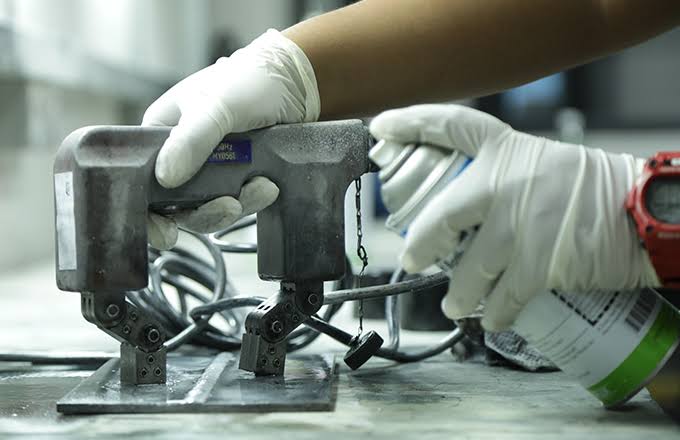
Our MPI Inspection Process
Surface Preparation
Cleaning the test surface to remove any dirt, oil, grease, or scale that could interfere with the inspection. Proper surface preparation ensures accurate and reliable results.
Magnetization
Applying a magnetic field to the test piece using direct or indirect magnetization techniques. The method and direction of magnetization are selected based on the component geometry and expected defect orientation.
Particle Application
Applying ferromagnetic particles (dry or wet, visible or fluorescent) to the magnetized surface. Particles accumulate at areas of magnetic flux leakage caused by discontinuities.
Interpretation & Evaluation
Examining the indications formed by the particles under appropriate lighting (white light or UV). Each indication is evaluated against acceptance criteria defined by the applicable standard.
Demagnetization & Reporting
Demagnetizing the test specimen to prevent residual magnetism from affecting its performance. A detailed inspection report is prepared documenting findings, methods used, and results.
Applications in Oil & Gas
Drill Pipe & Tool Joints
Detection of fatigue cracks, stress corrosion cracking, and other surface defects in drill string components.
BHA Components
Inspection of drill collars, stabilizers, subs, and other bottom hole assembly components for surface-breaking defects.
Wellhead & Christmas Tree
Surface inspection of critical pressure-containing components used in well control operations.
Structural Components
Inspection of mast legs, substructure members, and other load-bearing structural elements on drilling rigs.
Lifting Equipment
Inspection of hooks, shackles, slings, and other lifting equipment to ensure safe operation.