Understanding Why Components Fail
When equipment fails in the oil and gas industry, understanding the root cause is critical — not only to fix the immediate problem but to prevent recurrence. Failure analysis involves the systematic examination of failed components using visual assessment, non-destructive testing, dimensional analysis, and technical evaluation to determine the failure mechanism and contributing factors.
At Well Guard Inspection Services, our failure analysis approach combines field-level practical experience with technical evaluation capabilities to deliver clear, actionable findings that help our clients make informed decisions about equipment management and operational practices.
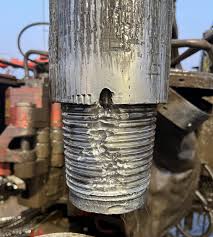
Our Failure Analysis Process
Evidence Collection & Preservation
Securing and documenting failed components before any further handling. Photographic documentation of the as-received condition, fracture surfaces, and surrounding environment.
Visual & Macroscopic Examination
Detailed visual examination of fracture surfaces, deformation patterns, corrosion products, and wear marks to establish initial observations about the failure mode.
Non-Destructive Testing
Applying NDT methods (MPI, DPT, UTM) as needed to characterize the extent of cracking, material loss, or other damage in the failed component and adjacent areas.
Root Cause Determination
Analyzing all collected data to determine the failure mechanism (fatigue, overload, corrosion, stress corrosion cracking, etc.) and the contributing factors.
Report & Recommendations
Preparing a comprehensive failure analysis report with findings, root cause conclusions, photographic evidence, and recommendations for corrective and preventive actions.
Common Failure Mechanisms We Investigate
Fatigue Failure
Progressive cracking under repeated cyclic loading — one of the most common failure modes in drill pipe, structural components, and rotating equipment.
Corrosion & Erosion
Material degradation due to chemical attack, galvanic corrosion, pitting, or erosion from fluid flow and particulate contact.
Overload & Impact
Sudden failure due to loads exceeding the material's ultimate strength, or impact damage from improper handling or operational incidents.
Stress Corrosion Cracking
Cracking caused by the combined effect of tensile stress and a corrosive environment, often found in high-strength steel components.
Hydrogen Embrittlement
Loss of ductility and cracking caused by hydrogen absorption in high-strength steel components, particularly in sour service environments.