Preventing Dropped Object Incidents
Dropped objects are one of the leading causes of injuries and fatalities in the oil and gas industry. Items falling from height — tools, bolts, fittings, scaffold clips, equipment parts — can cause severe injuries, equipment damage, and operational disruption. The Dropped Objects Prevention Scheme (DROPS) provides a systematic approach to identify, assess, and eliminate these hazards.
Well Guard Inspection Services conducts thorough Drops surveys using the internationally recognized Drops methodology and calculator. Our qualified inspectors systematically assess every area of a rig or facility where dropped objects could originate, calculating risk levels and recommending practical mitigation measures to protect personnel and assets.
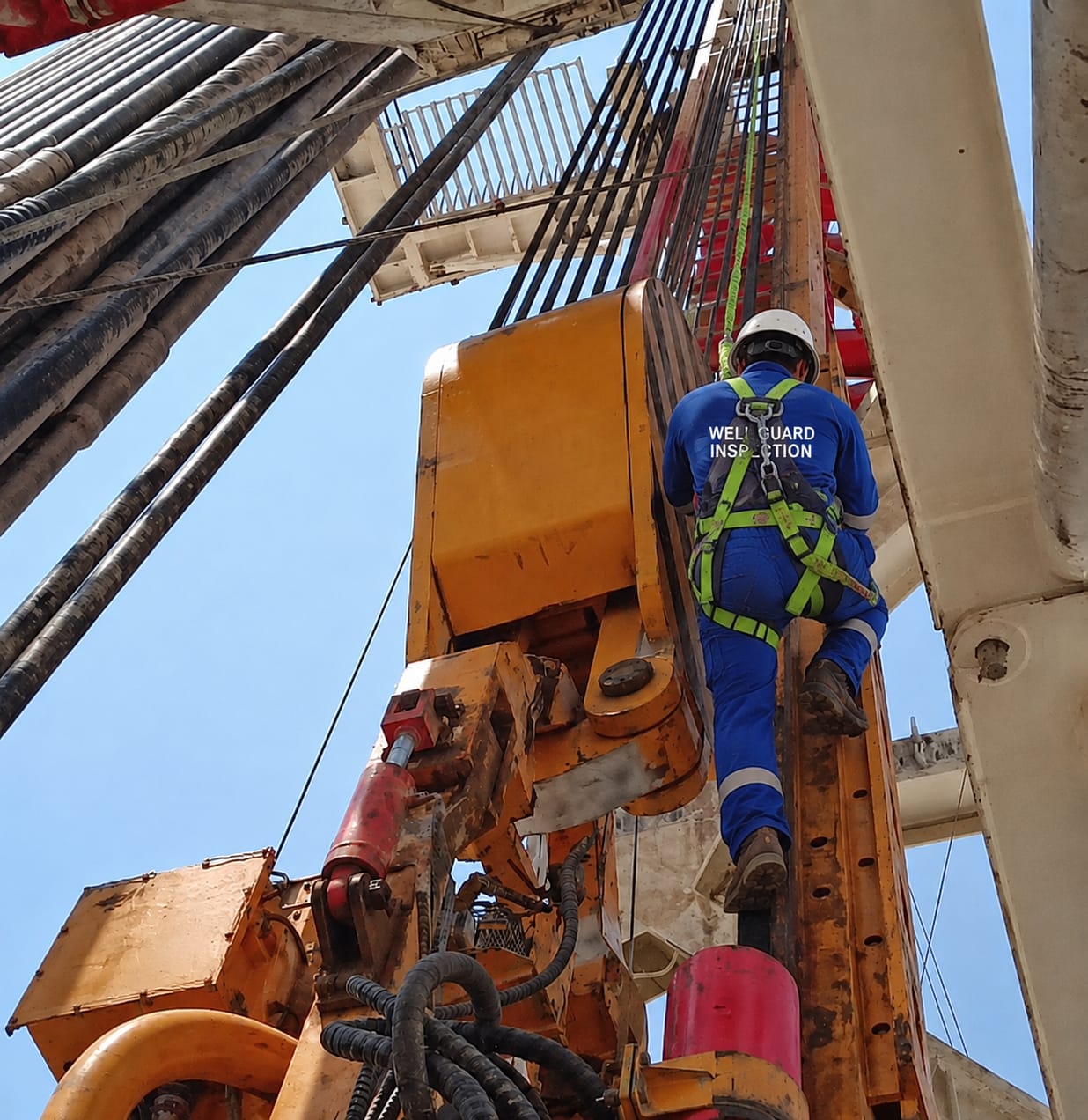
Survey Scope
Static Drops Survey
Systematic inspection of fixed structures, equipment, platforms, handrails, gratings, and fixtures at height to identify items with potential to fall due to corrosion, vibration, or inadequate securing.
Dynamic Drops Survey
Assessment of activities and operations that create dropped object hazards — crane lifts, drilling operations, maintenance work at height, scaffolding, and material handling.
Drops Calculator Assessment
Quantitative risk assessment using the Drops calculator to evaluate the consequence and likelihood of dropped objects based on height, weight, exposure, and probability factors.
Secondary Retention Review
Evaluation of secondary retention methods (safety wires, lanyards, tethering, netting, toe boards) to ensure critical items have backup securing against becoming dropped objects.
Exclusion Zone Assessment
Review and verification of exclusion zones, barricading, and warning systems below areas where dropped object risk exists during operations and maintenance activities.
Housekeeping Audit
Assessment of general housekeeping practices, tool management, material storage at height, and loose item control procedures to identify systemic dropped object risks.
Survey Process
Pre-Survey Planning
Review of facility layout, previous DROPS findings, incident history, and current operations. Definition of survey scope, areas to inspect, and team mobilization requirements.
Field Inspection
Systematic area-by-area inspection from top to bottom. Identification and photographic documentation of all potential dropped object hazards with location referencing.
Risk Assessment
Application of Drops calculator to each identified hazard. Classification by risk level (high, medium, low) based on potential consequence and probability of occurrence.
Reporting & Recommendations
Comprehensive Drops report with hazard register, risk rankings, photographic evidence, recommended corrective actions, and prioritized close-out plan for identified findings.