Environmental Compliance Through Accurate Testing
Oil and gas operations generate various emissions including combustion gases, volatile organic compounds (VOCs), and particulate matter. Regulatory bodies worldwide require operators to monitor, measure, and control these emissions to protect the environment and public health. Non-compliance can result in heavy fines, operational shutdowns, and reputational damage.
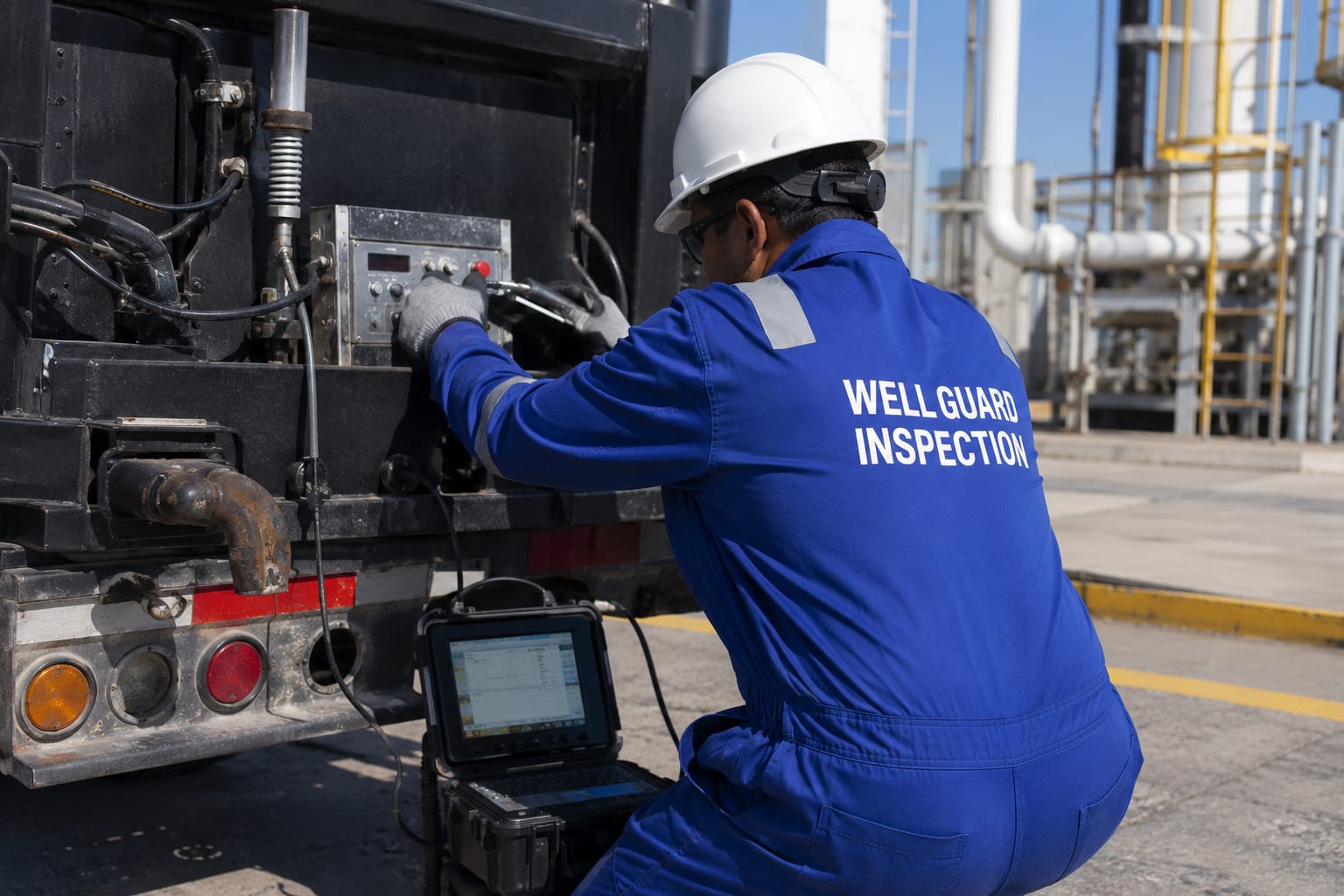
Well Guard Inspection Services provides professional emission testing services using calibrated instruments and proven measurement methodologies. Our qualified technicians conduct emission surveys, stack testing, and fugitive emission monitoring to help clients maintain compliance with environmental regulations and industry standards.
Our Testing Services
Stack Emission Testing
Measurement of exhaust emissions from engines, generators, boilers, heaters, and flare stacks. Analysis of CO, CO₂, NOx, SO₂, O₂, and particulate matter concentrations.
Fugitive Emission Detection
Leak Detection and Repair (LDAR) surveys using OGI cameras and portable gas detectors to identify and quantify fugitive emissions from valves, flanges, and connections.
Engine Emission Testing
Testing of diesel and gas engine exhaust emissions to verify compliance with manufacturer specifications and regulatory emission limits for on-site power generation equipment.
Ambient Air Quality Monitoring
Monitoring of ambient air quality around operational areas to assess impact on surrounding environment and ensure compliance with air quality standards.
Compliance Reporting
Preparation of detailed emission test reports with data analysis, comparison against regulatory limits, trend assessment, and recommendations for emission reduction.
Testing Process
Scope Definition
Identification of emission sources, applicable regulations, testing parameters, and measurement points. Planning of test schedule and equipment requirements.
Equipment Setup
Deployment and calibration of emission analyzers, gas detectors, and monitoring equipment at designated test points.
Data Collection
Systematic measurement and recording of emission parameters under normal operating conditions. Multiple readings to ensure data accuracy and reliability.
Analysis & Reporting
Data analysis, comparison with regulatory limits, preparation of compliance reports, and recommendations for any corrective actions needed.